In a country blessed with abundant sunshine like Egypt, maximizing your photovoltaic system’s potential is crucial. However, the reliability of solar energy depends heavily on how effectively you can store it. This is where choosing high-performance Solar batteries becomes the deciding factor between a system that merely works and one that guarantees total energy security. Whether you are looking to bridge the gap during power outages or achieve complete off-grid independence, the quality of your storage solution matters.
At Neo Energy, we understand that every watt counts. That is why we specialize in providing advanced storage technologies tailored to the Egyptian climate. In this comprehensive guide, we will explore the best options available in the market, with a special focus on modern Lithium batteries solar solutions versus traditional lead-acid types, helping you make an investment that ensures stable power for years to come.
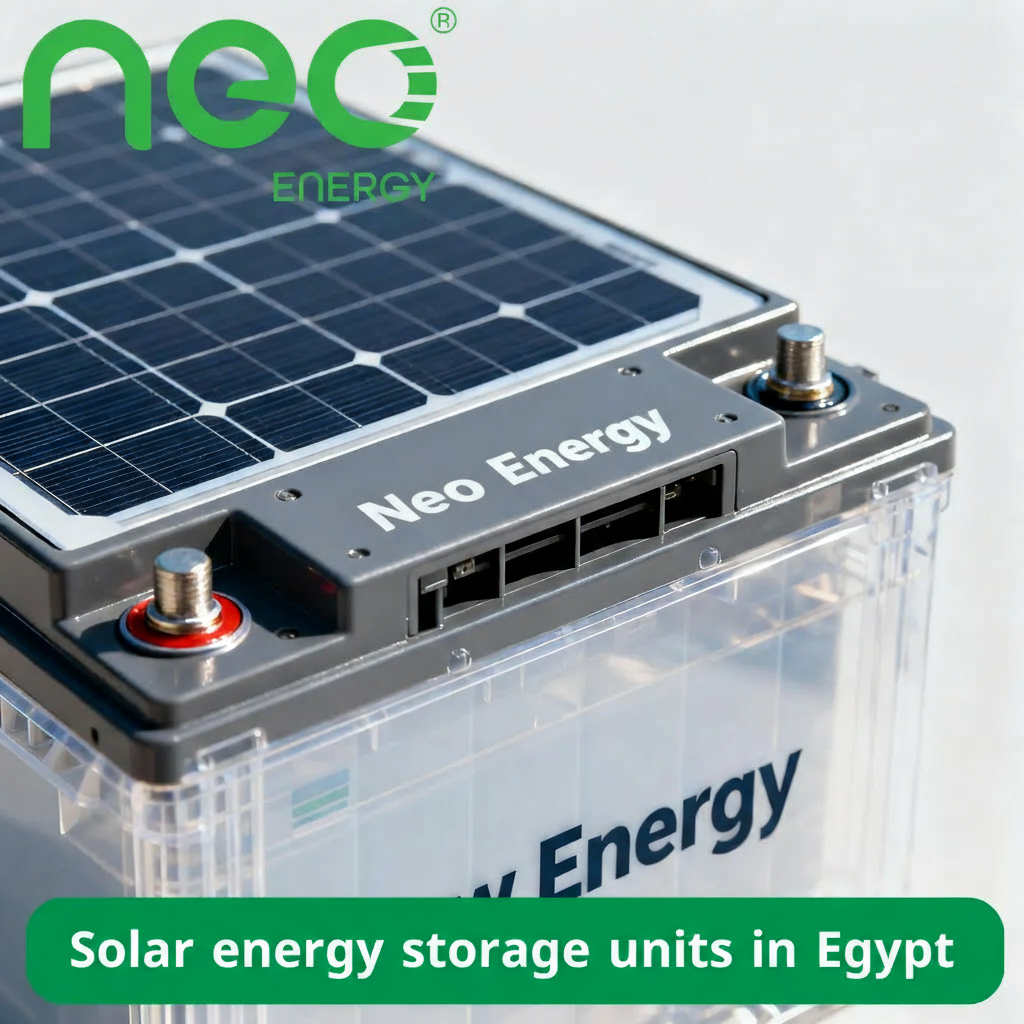
Types of Solar Batteries Available in Egypt
Choosing the right energy storage is crucial for the efficiency and reliability of your system. At Neo Energy, we provide a diverse range of Solar batteries to meet different performance requirements and budgets. Understanding the core differences between these technologies will empower you to select the perfect fit for your specific needs.
1. Lead-Acid Batteries (Flooded & Sealed/GEL)
Lead-acid technology has been the backbone of off-grid systems for decades due to its affordability. They come in two main forms:
- Flooded Lead-Acid: The most economical option, but they require regular maintenance (distilled water top-ups) and proper ventilation.
- Sealed Lead-Acid (GEL/AGM): These are maintenance-free and safer for indoor installation as they do not emit fumes, making them a popular choice for residential backup.
While cost-effective initially, lead-acid batteries generally have a shorter lifespan and a lower depth of discharge (DoD) compared to modern alternatives.
2. Lithium-Ion Batteries (LiFePO4)
When evaluating advanced Lithium batteries, solar solutions based on Lithium Iron Phosphate (LiFePO4) technology represent the modern standard. At Neo Energy, we focus on this specific chemistry because it is celebrated for its exceptional safety and thermal stability—crucial factors for Egypt’s hot climate. Unlike lead-acid, lithium batteries allow for a deep discharge (up to 90-100%) without damaging the internal cells. Although the upfront cost is higher, their extended lifespan (10+ years) and zero-maintenance requirements make them a superior long-term investment.
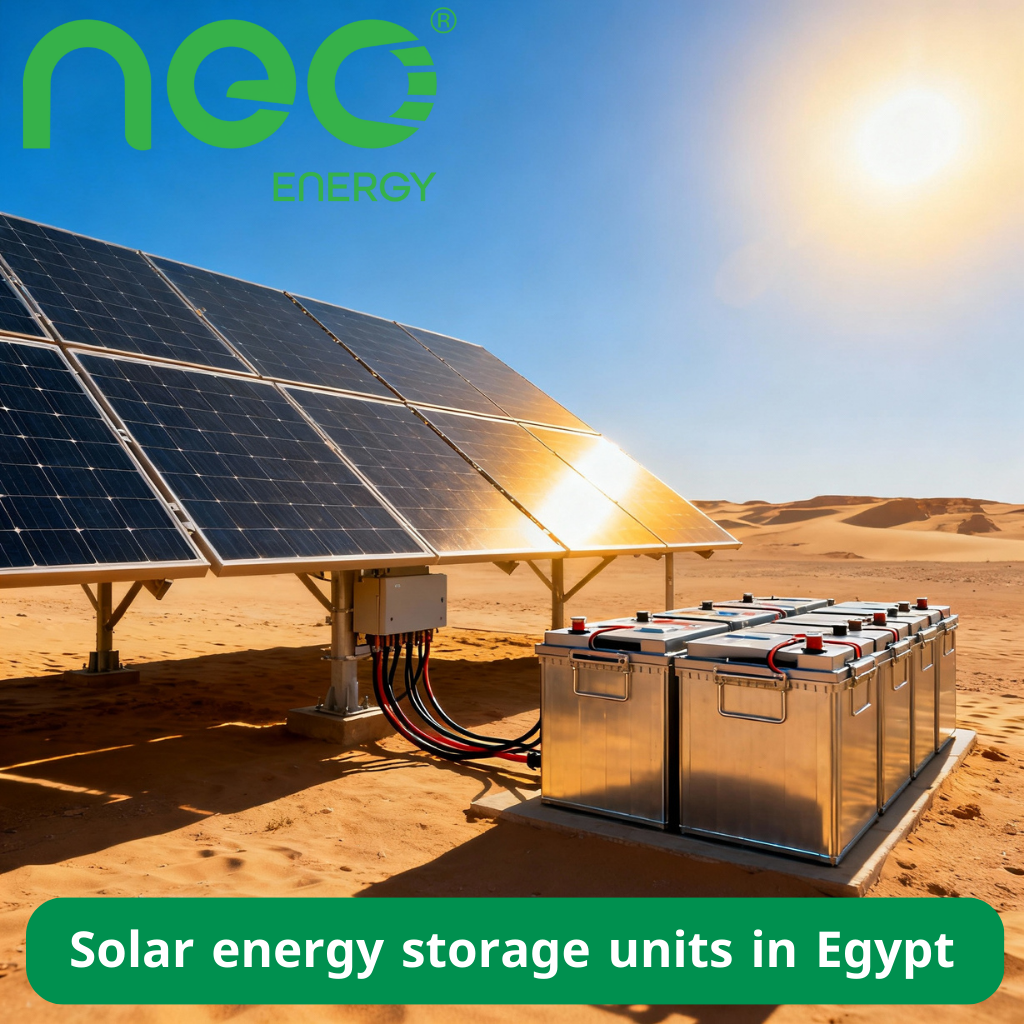
Comparison Between Lithium and Lead-Acid Batteries
To simplify your decision, we have broken down the key differences between traditional lead-acid systems and modern energy storage technologies. This comparison highlights why investing in quality makes a difference for your long-term savings.
| Feature | Lead-Acid Batteries | Lithium-Ion (LiFePO4) |
|---|---|---|
| Cost & Value | Low initial purchase price, but higher long-term cost due to frequent replacements. | Higher upfront investment, but superior long-term value (Lowest cost per kWh). |
| Depth of Discharge (DoD) | Limited to 50% usage to prevent permanent damage. | Can be discharged up to 90-100%, giving you more usable energy. |
| Lifespan | Short life expectancy (3-5 years on average). | Long life expectancy (10-15+ years). |
| Maintenance | Requires regular monitoring and water top-ups (for flooded types). | 100% Maintenance-free (“Fit and Forget” technology). |
Ultimately, the choice depends on your specific budget. However, for daily use and critical loads, advanced Lithium batteries solar setups offer a significantly better return on investment.
Working with Neo Energy (From Inquiry to Full Operation)
At Neo Energy, we make the process of installing your solar power system seamless and transparent. Here are the steps to get your reliable Solar batteries solution up and running:
- Initial Consultation: Contact us with your project details. Our experts will discuss your energy needs, whether for a small home or a large commercial facility.
- Site Assessment: Our technical team can conduct a site visit to assess your location, energy consumption patterns, and technical requirements for the installation.
- Custom Proposal: Based on the assessment, we will provide a detailed proposal recommending the best battery type, whether it’s a cost-effective lead-acid set or a high-performance Lithium batteries solar system.
- Professional Installation: Once you approve the proposal, our certified technicians will handle the complete installation, integration, and commissioning of your battery system with the utmost professionalism.
- After-Sales Support: We remain your partner even after installation, offering ongoing support and maintenance advice to ensure your system operates at peak performance.
Partnering with Neo Energy means you get a turnkey solution from a trusted provider in Egypt’s solar energy market.
Solar Battery Prices and Influencing Factors in Egypt
The price of Solar batteries in Egypt varies based on several key factors rather than a single fixed number. Understanding these factors will help you appreciate the value behind your investment. At Neo Energy, we ensure our pricing is transparent and reflects the quality and performance of our products.
- Battery Technology: This is the biggest price driver. Advanced Lithium batteries solar options have a higher upfront cost than traditional lead-acid batteries but offer better long-term value.
- Capacity (Ah/kWh): The larger the battery’s storage capacity (measured in Ampere-hours for lead-acid or kilowatt-hours for lithium), the higher its price.
- Brand and Quality: Reputable international brands with a proven track record of reliability and safety command higher prices than generic or lower-quality alternatives.
- Lifespan and Cycles: Batteries with a longer projected lifespan (more charge/discharge cycles) are a bigger initial investment but cost less over time. Lithium batteries excel here.
- Warranty Period: A longer and more comprehensive warranty is a mark of quality and adds to the battery’s overall cost, providing peace of mind for the buyer.
For an accurate and customized quote based on your specific needs, it’s always best to consult with our experts at Neo Energy.
How to Choose the Right Battery
Selecting the ideal battery depends entirely on your application, energy demand, and budget. At Neo Energy, we guide our clients to find the perfect match, ensuring their investment in Solar batteries delivers maximum value. Here’s a breakdown of recommendations for common scenarios in Egypt:
For Homes (Small and Backup Systems)
For residential use, especially for backup power during outages, a well-sized lead-acid battery system can be a cost-effective start. However, for homes relying on solar for daily power, a Lithium batteries solar system is a far superior choice due to its long life, high efficiency, and maintenance-free operation.
For Farms and Irrigation Systems
Agricultural applications, such as water pumps and irrigation systems, demand reliability and durability. LiFePO4 lithium batteries are highly recommended here. They can handle high power draws, operate efficiently in Egypt’s climate, and have a long cycle life, ensuring your farm’s operations run smoothly without interruption.
For Commercial and Industrial Projects
For businesses, factories, and commercial establishments, the primary considerations are ROI, reliability, and scalability. Lithium batteries solar systems are the clear winner. Their long lifespan, minimal maintenance, and high efficiency guarantee lower operational costs over time and provide a stable power source for critical business operations.
How to Calculate Your Required Battery Capacity
Understanding how much storage you actually need is the first step to avoiding unnecessary costs. At Neo Energy, our engineers use a precise formula to size your system correctly. Here is a simplified breakdown of what we consider:
- Total Daily Consumption: We calculate the total wattage of all appliances you want to run during an outage or at night, multiplied by the hours of expected use (measured in kWh).
- Days of Autonomy: This refers to the number of days you need the battery to supply power without being recharged by the sun (crucial during cloudy winter days).
- Depth of Discharge (DoD): If you choose a 200Ah lead-acid battery with a 50% DoD, you only have 100Ah of usable power. If you choose a 200Ah lithium battery with a 90% DoD, you get 180Ah of usable power.
By analyzing these factors, our team ensures you purchase the exact capacity required—nothing more, nothing less.
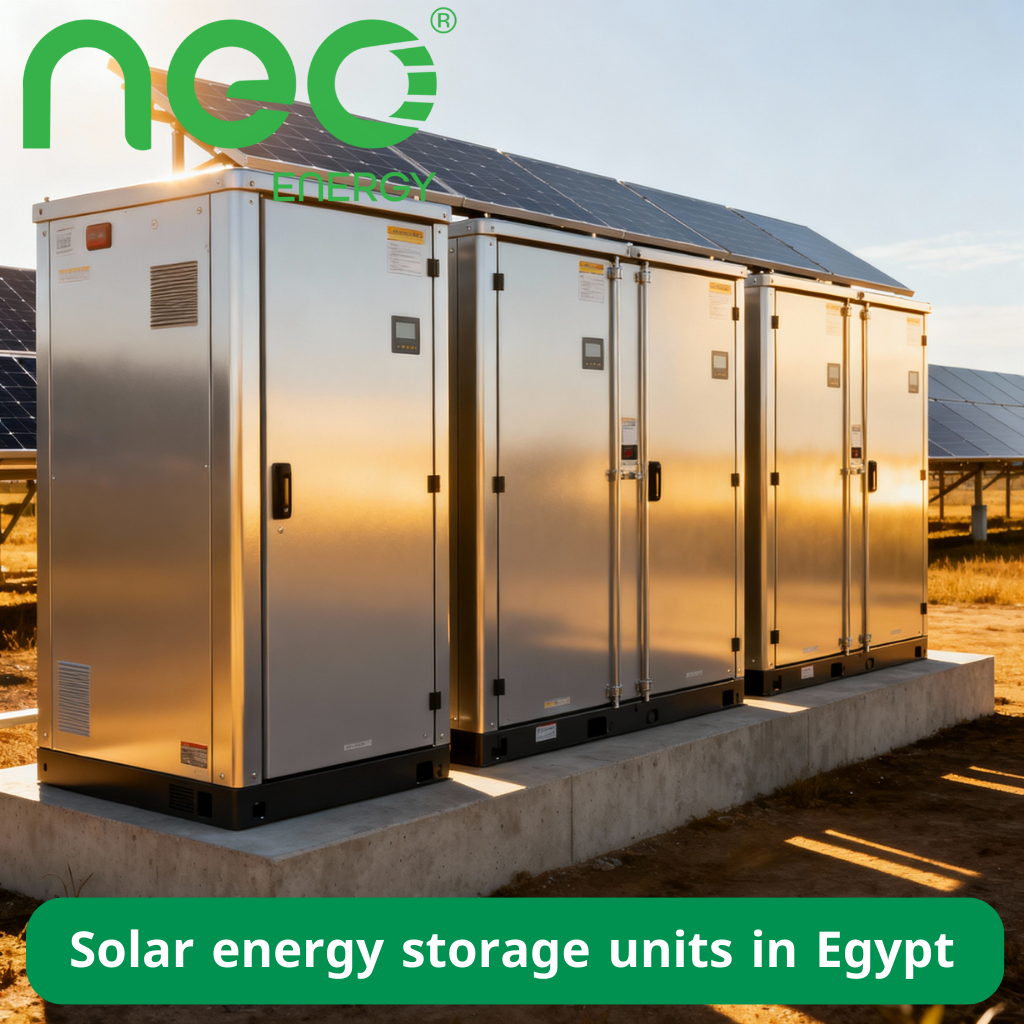
Why Neo Energy is the Best Provider for Solar Batteries in Egypt
Choosing a provider for your Solar batteries is as important as choosing the battery itself. At Neo Energy, we distinguish ourselves as Egypt’s leading energy partner, not just a supplier. Our approach is built on three pillars: expertise, quality, and customer-centric service. Our team of expert engineers designs customized solutions tailored to your unique energy profile, ensuring optimal performance and maximum ROI. We exclusively source high-performance Lithium batteries solar and reliable lead-acid options from globally recognized manufacturers, guaranteeing that every product meets the highest standards of safety and efficiency. This commitment to excellence, combined with robust warranties and dedicated after-sales support, makes Neo Energy the most reliable choice for achieving true energy independence.
Conclusion
Choosing the right Solar batteries is a crucial step towards achieving energy independence in Egypt. While lead-acid batteries provide an affordable starting point, the superior efficiency, long lifespan, and maintenance-free convenience of Lithium batteries solar solutions make them the smartest long-term investment. At Neo Energy, we are committed to helping you find the perfect storage solution tailored to your needs. Ready to power your future? Contact us today for a personalized consultation and a free quote.
Frequently Asked Questions (FAQ)
Here is a list of the most prominent questions you may have. For any further inquiries, please do not hesitate to contact us.
How long do solar batteries last?
The lifespan of Solar batteries depends on the technology. Traditional lead-acid batteries typically last 3-7 years, while advanced Lithium batteries solar options, like the ones we recommend at Neo Energy, can last for 10-15 years or even longer, offering superior long-term value.
Are lithium batteries worth the price difference?
For most long-term applications, absolutely. While the initial cost is higher, Lithium batteries solar deliver superior value over time. They offer higher efficiency (more usable energy), a deeper depth of discharge, a significantly longer cycle life, and are virtually maintenance-free. This translates to better performance and a lower total cost of ownership, making them the smarter economic choice for a serious solar project.
Can different types of batteries be installed together?
It is strongly discouraged to mix different battery types (like lead-acid and lithium) in the same system. Each technology has a different voltage, charge/discharge profile, and chemistry. Mixing them can lead to poor performance, damage to the batteries, and potential safety hazards. It’s always best to use a uniform set of batteries.